August 17, 2025
The Quiet Revolution
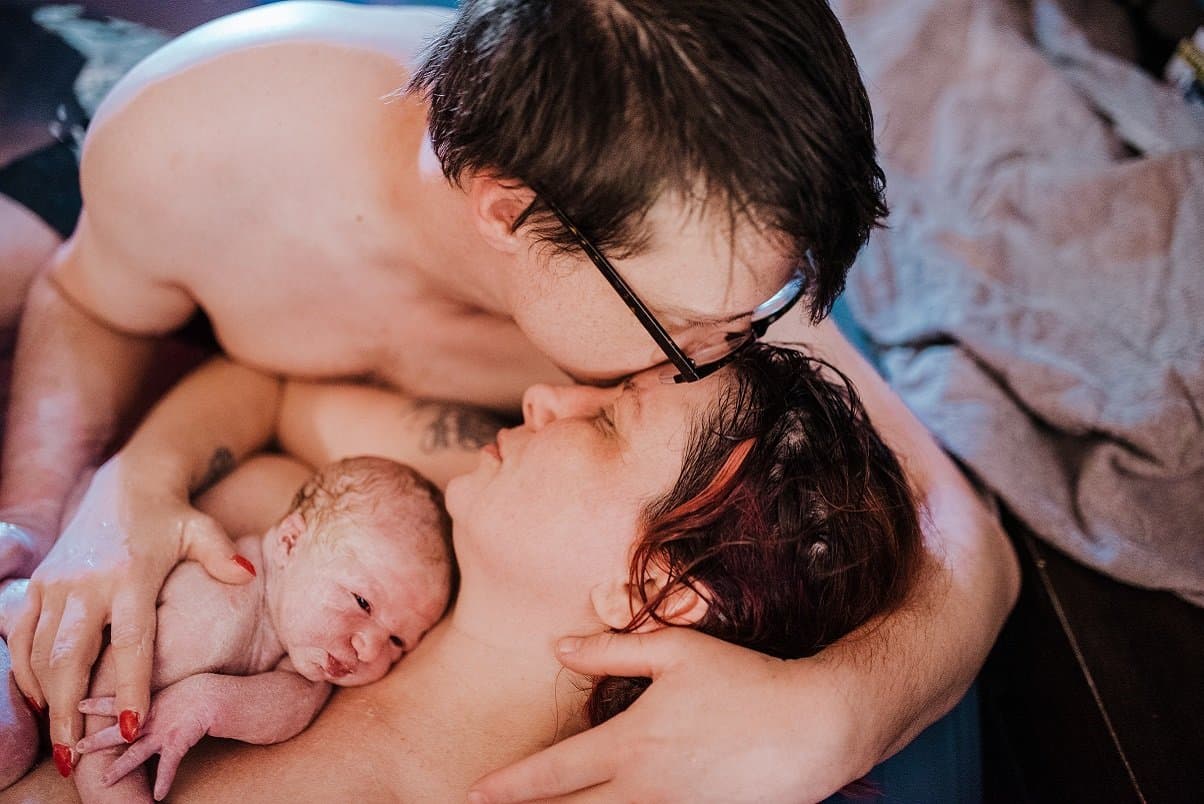
The Quiet Revolution
Something is happening, and it's happening quietly. In living rooms and birth centers, in hospital suites and backyard birth pools, families are making a choice that would have been unthinkable a generation ago: they are inviting artists into their birth spaces. Not to perform. Not to direct. But to witness — and to make that witnessing permanent.
Birth photography is not new. But the intention behind it is evolving.
From clinical to sacred
For most of modern history, birth was documented — when it was documented at all — from a clinical perspective. Medical photographs. Training footage. The baby after, cleaned and swaddled and held up for the camera. The birth itself was considered too private, too messy, too much for the lens.
That is changing. Families are recognizing that the rawness of birth is not something to be hidden — it is something to be honored. The sweat, the tears, the primal sounds, the shaking hands, the first breath — these are not moments to be sanitized. They are moments to be seen.
What's driving the shift
Part of it is cultural. We live in an era of radical honesty, of rejecting the curated in favor of the real. Part of it is generational — millennials and Gen Z parents grew up with cameras, and they understand the power of images to tell stories that words cannot.
But I think the deepest driver is something simpler: mothers are tired of disappearing into the experience. They want to be seen in it. Not just as the vessel, but as the person — trembling, roaring, breaking open, rebuilding. They want proof that they were there, that they were extraordinary, that the hardest thing they ever did also made them the most powerful version of themselves.
Where it's going
This quiet revolution has no manifesto, no organization, no leader. It is simply families — one at a time — deciding that birth is worth remembering in its fullness. That is enough. That is everything.