February 28, 2026
The Art of Witnessing
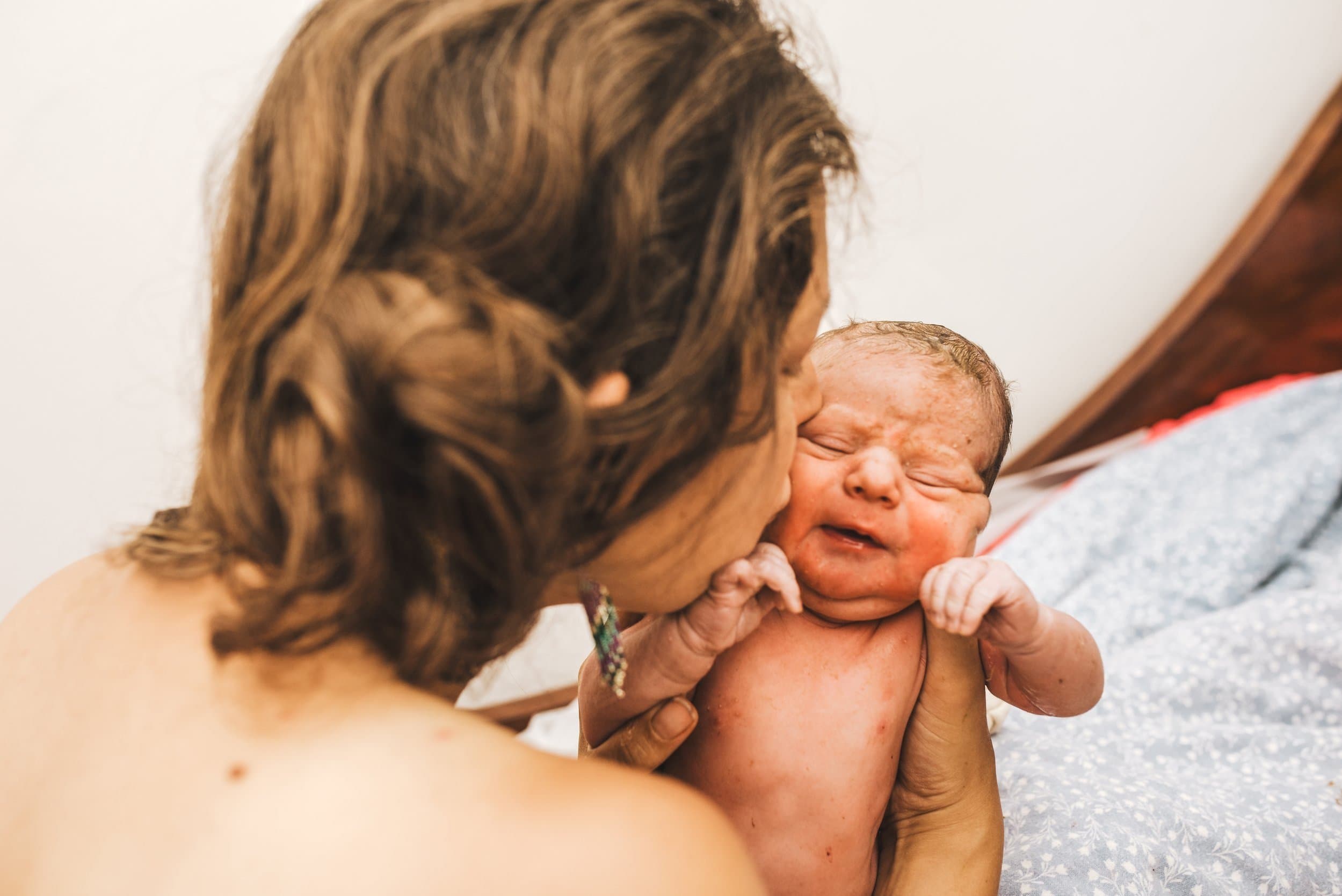
The Art of Witnessing
There's a difference between watching something happen and witnessing it. Watching is passive. Witnessing is an act of presence — it requires your whole self.
When I walk into a birth space, I don't walk in as a photographer. I walk in as a witness. The camera is secondary. My body, my breath, my ability to hold space — those come first. The images are a consequence of presence, not the purpose of it.
The artist's paradox
Every artist working in documentary spaces faces the same tension: how do you create something beautiful without imposing on the moment? How do you compose without directing? How do you serve both the image and the person inside it?
I've spent years learning to dissolve that tension. It happens when I stop thinking about the photograph and start feeling the room. The rhythm of contractions. The temperature of the light. The way a mother's voice changes as she moves deeper into labor. When I'm tuned to all of that, the compositions find themselves.
What witnessing asks of me
It asks me to be invisible and fully present at the same time. It asks me to hold emotion without absorbing it. It asks me to stay for twelve hours or twenty and never once make the moment about me. It asks me to cry in my car afterward because what I saw was so beautiful it broke something open in me.
Why it matters
Because birth deserves witnesses. Not spectators, not documentarians with a checklist — but someone who understands that what is happening in that room is ancient, unrepeatable, and holy. Someone who will remember it with you.
That is the art. Not the f-stop, not the edit, not the frame. The art is in the witnessing itself.